


In countless encounters across raids and dungeons, the periphery of the combat area is lined with lethal environmental hazards—cliffs, lava, void zones, or permanent damage fields. Positioning Near Environmental Hazards is a constant **Safety Check** that dictates the risk profile of every movement. This discipline separates players who execute **Clean Evasion**—dodging mechanics while maintaining safe footing—from those suffering **Unnecessary Positional Damage** or death due to proximity to the boundary, often leading to wipes.
This analysis details the common pitfalls of boundary proximity, the “Safety Buffer” rule, and the disciplined movement required to respect the constraints of the fighting space.
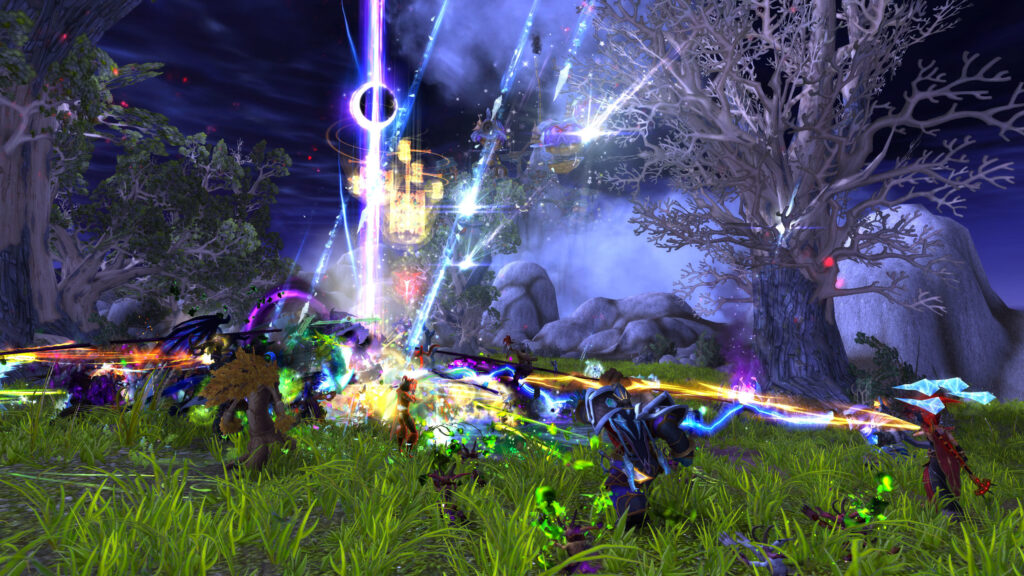
The Dual Threat of Environmental Hazards
Environmental hazards present a dual threat: they punish players who stand in them, and they restrict available movement space. The primary failure of players in this regard is not respecting the limitations on their movement vector when facing mechanics that push or knock them back.
Unnecessary Positional Damage occurs when a player stands too close to a hazard, leaving no room to cleanly evade an incoming boss mechanic. For example, a player standing on the edge of a cliff will be instantly knocked off by a light push that a centralized player could have easily recovered from.
The Safety Buffer Rule (Mid-Zone Anchor)

The **Safety Buffer Rule** mandates that all players, particularly the tank and high-priority casters, maintain a significant buffer zone between themselves and the environmental boundary. While the temptation is to use the edge of the room to simplify positioning, the cost of an environmental death is usually too high.
- Tank Buffer: Tanks must anchor the boss near the center or a controlled wall, ensuring any knockback or forced movement leaves enough space to quickly reposition without landing in lethal territory.
- Ranged Buffer: Ranged DPS and healers must always treat the periphery as a zone of last resort, maximizing the distance between themselves and the hazard to guarantee space for a Clean Evasion (dodging a targeted AoE) without running into a cliff.
Positioning and Directional Movement
Discipline is required to always move away from the hazard. When a mechanic targets a player near the edge, the player must move *parallel* to the boundary or *inward* toward the group’s safe zone, rather than running blindly along the hazard, which increases the risk of misclicking or being clipped by a boss cone.
| Environmental Hazard | Positional Failure (Unnecessary Damage) | Clean Evasion Tactic |
|---|---|---|
| Lethal Cliff Edge | Tank anchors boss near the edge to simplify movement. | Anchor boss in the center; move only when necessary for a mechanic. |
| Lava/Void Zones | Caster stands at the edge to maximize range from melee. | Caster maintains mid-range position, ensuring full 360-degree evasion space. |
| Shrinking Arena | Raid fails to move inward quickly enough during the decay phase. | Designated players move to the center Pre-Move before the boundary reaches them. |
Consequence: The Unavoidable Death
A death to an environmental hazard is often **unavoidable** once the player is too close, as recovery mechanics (like instant dashes or leaps) are often on cooldown or insufficient. By respecting the Safety Check and maintaining the Buffer Zone, players eliminate the risk of an instantaneous, unrecoverable positional death.
Conclusion
Positioning Near Environmental Hazards is a constant safety check that demands disciplined movement and respect for the available fighting space. By maintaining the critical Safety Buffer and prioritizing movement direction away from hazards, teams ensure Clean Evasion from mechanics, separating themselves from the costly mistakes and unnecessary positional damage caused by boundary proximity.